It’s May and so Spring is here. That’s why I was reminiscing with my partner yesterday about the May Queen. I told her how I was just a nipper back then, gazing out of the window of my Irish home in County Down in order to pick out a bunch of noisy children not much older than me who I knew must be from the nearby village of Shrigley. They came walking up the road, led by a little girl in a make-do bridal garment with a garland of flowers around her head.
They must have called at our door and delivered a song for us, no doubt expecting a few pennies in return. However I do not recall that part of the story. Perhaps my mother gave them short shrift, suspecting the avarice of some of the youngsters who made up that motley crew. Or maybe I was too frightened of the May Queen with her feral entourage to let them in. But their journey around the winding roads of Down pleases me now as evidence of times long gone when local children tapped into something mythical and age-old, taking pleasure in the effort required to make a few pence for spending in Shrigley’s village shop on bubble gum, lollipops and sherbets.
Once I began to think about the May Queen, I remembered the array of individuals who called at our door in the 1960 s. Once a week the bread man came, with the deep wooden trays of his red and white bread van stacked with fresh loaves which he fished out with a long wooden pole. Early each day, Francis the milk-man called and I could hear the chink of the milk bottles he set on our door step to replace our empties. I lay in bed, still huddling in the warmth of my bedclothes before I rose for school on those dark, frosty winter mornings.
Less frequent, but always welcome, were the two men whose lorry was stacked with bags of coal from the warehouse on the quay at Killyleagh harbour where the colliers docked. Each coal man’s face was black with soot and both wore leather sleeveless jackets, a garment I now know to be one of the ‘cast-offs’ from the Great War where it was used by artillery men, humping shells on their backs from munitions stores towards the gun emplacements of the Western Front.
That world of my childhood visitors is gone as surely as the trenches of Flanders. The colliers have long since vanished from the quay, the milk man’s lorry has probably gone to scrap. And I do wonder where that bread man’s pole is now as it deserves to appear in the Ulster Museum where young visitors can ponder an era of retail that is history to them but memory to me.
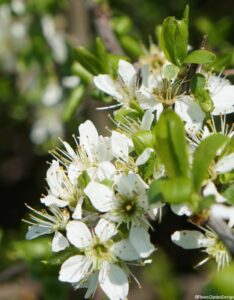
I was reminded by a friend just the other day of one thing that hasn’t vanished from the country roads where so many of us grew up. My friend was sharing her love of Little Gidding, that little church in Cambridgeshire which formed the inspiration for one of TS Eliot’s beautiful poetic sequences in The Four Quartets. The enduring springtime element to which she referred is the May blossom that Eliot mentions in his poem, which enriches the springtime hedges of the approaching pilgrim with its ‘voluptuary sweetness’. I was taken back to the fragrant hawthorn hedgerows on my youth and I do imagine that were I to find those childhood roads, where the May Queen no longer reigns for day, I would encounter the same enduring yearly blossom.